
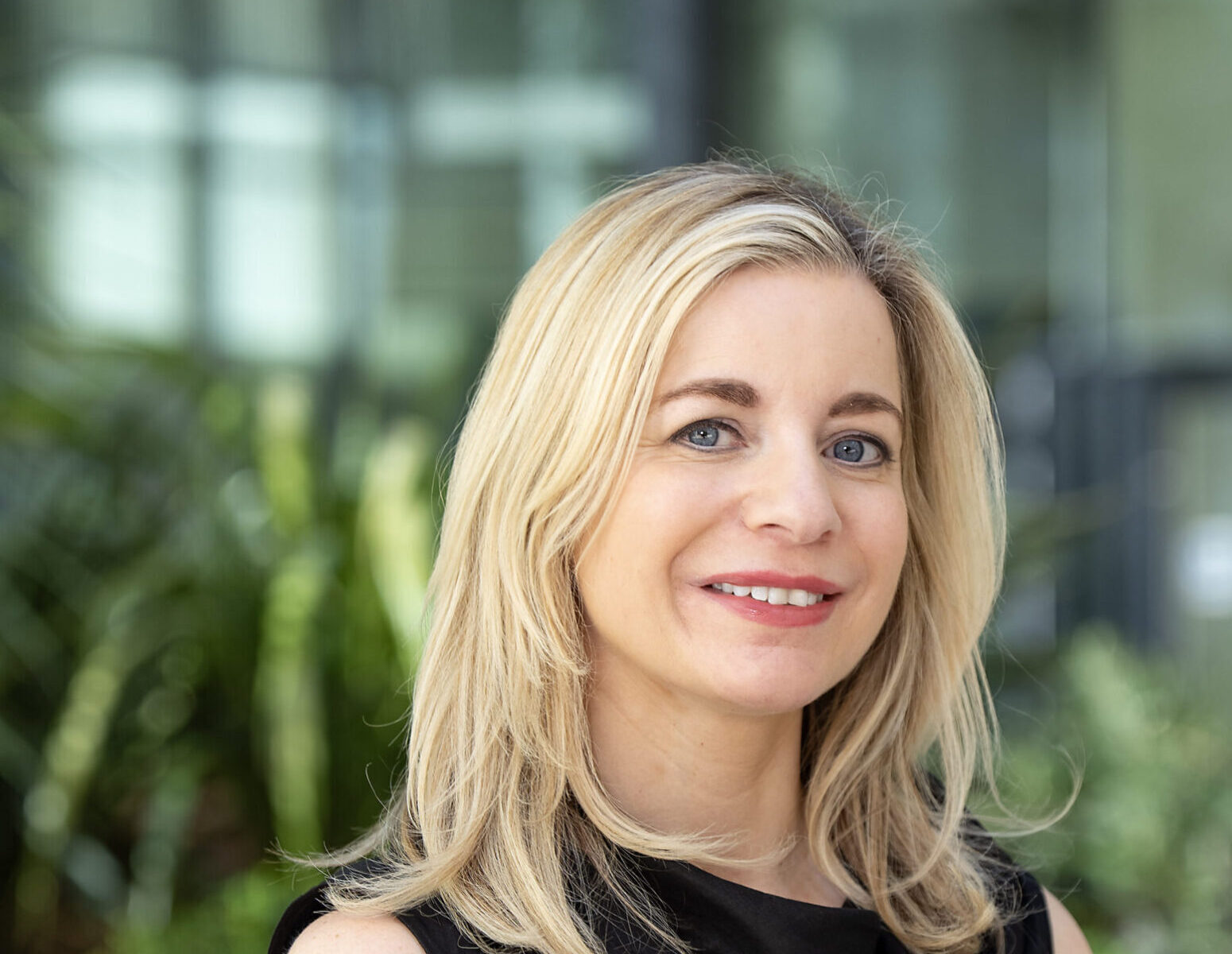

The feature below appeared in the Irish News on Tuesday 26th May, written by Christine White, Director of Diversity Mark.
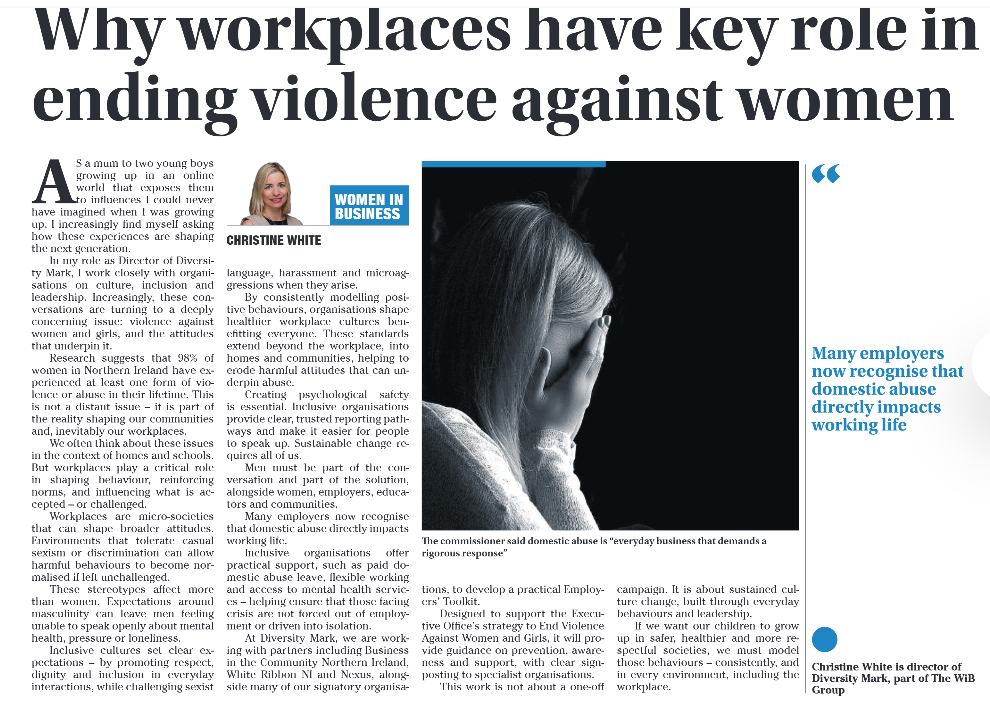
As a mum to two young boys growing up in an online world that exposes them to influences I could never have imagined when I was growing up, I increasingly find myself asking how these experiences are shaping the next generation.
In my role as Director of Diversity Mark, I work closely with organisations on culture, inclusion and leadership. Increasingly, these conversations are turning to a deeply concerning issue: violence against women and girls, and the attitudes that underpin it.
Research suggests that 98% of women in Northern Ireland have experienced at least one form of violence or abuse in their lifetime. This is not a distant issue – it is part of the reality shaping our communities and, inevitably our workplaces.
We often think about these issues in the context of homes and schools. But workplaces play a critical role in shaping behaviour, reinforcing norms, and influencing what is accepted – or challenged.
Workplaces are micro-societies that can shape broader attitudes. Environments that tolerate casual sexism or discrimination can allow harmful behaviours to become normalised if left unchallenged. These stereotypes affect more than women. Expectations around masculinity can leave men feeling unable to speak openly about mental health, pressure or loneliness.
Inclusive cultures set clear expectations – by promoting respect, dignity and inclusion in everyday interactions, while challenging sexist language, harassment and microaggressions when they arise. By consistently modelling positive behaviours, organisations shape healthier workplace cultures benefitting everyone. These standards extend beyond the workplace, into homes and communities, helping to erode harmful attitudes that can underpin abuse.
Creating psychological safety is essential. Inclusive organisations provide clear, trusted reporting pathways and make it easier for people to speak up. Sustainable change requires all of us. Men must be part of the conversation and part of the solution, alongside women, employers, educators and communities.
Many employers now recognise that domestic abuse directly impacts working life. Inclusive organisations offer practical support, such as paid domestic abuse leave, flexible working and access to mental health services – helping ensure that those facing crisis are not forced out of employment or driven into isolation.
At Diversity Mark, we are working with partners including Business in the Community Northern Ireland, White Ribbon NI and Nexus, alongside many of our signatory organisations, to develop a practical Employers’ Toolkit. Designed to support the Executive Office’s strategy to End Violence Against Women and Girls, it will provide guidance on prevention, awareness and support, with clear signposting to specialist organisations.
This work is not about a one-off campaign. It is about sustained culture change, built through everyday behaviours and leadership. If we want our children to grow up in safer, healthier and more respectful societies, we must model those behaviours – consistently, and in every environment, including the workplace.
Interested in Diversity Mark?
Find out more and book a call with our team