
By Christine White, Director of Diversity Mark
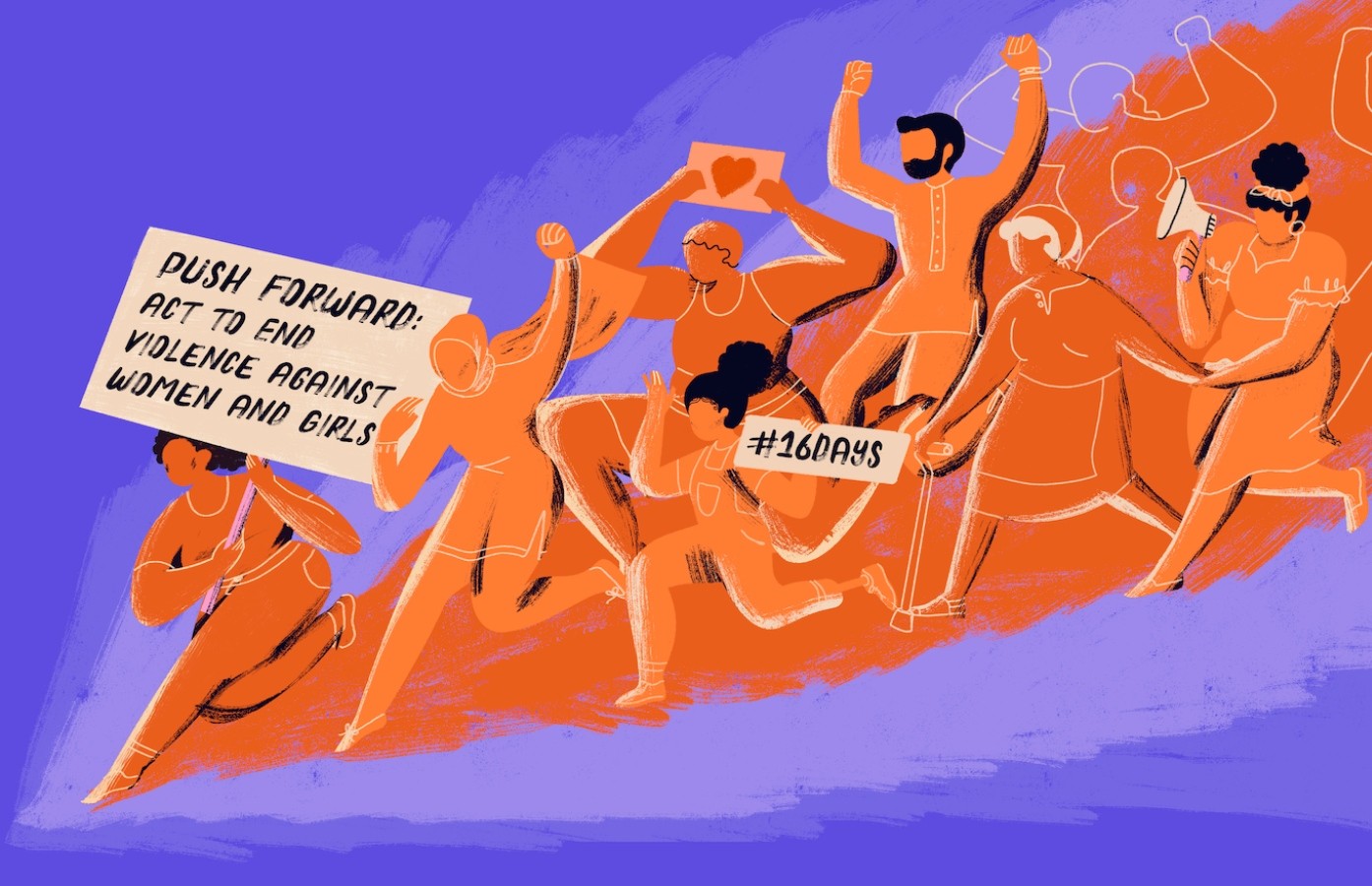
Every year, 25th November marks the International Day for the Elimination of Violence against Women, and the beginning of the 16 Days of Activism against Gender-Based Violence. It is an important opportunity to raise awareness, but also to ask a more difficult question: what are we actually going to do differently?
I am a mum raising sons, and that constantly makes me think about the role we all have in shaping the attitudes and behaviours of the next generation.
What are we teaching our boys about respect? About relationships? About how they speak about and treat women and girls? Are we giving them the confidence to challenge inappropriate behaviour among their friends, rather than simply staying silent?
These are not always easy conversations, but they are important ones.
I don’t believe they should begin when a young man enters the workplace. They start much earlier, in our homes, our schools, our friendship groups and our communities.
As a mum, I know I have a responsibility to be part of those conversations.
Behind every statistic is a person
There is another reason this issue feels particularly close to me.
I know two women who have experienced the unimaginable loss of their sisters.
Knowing them has made me very conscious that behind every statistic or headline is a person. A woman. A sister. A daughter. A mum. A friend. And around that person are families, friends and communities whose lives can be changed forever.
Perhaps that is why some of the conversations at our Diversity Mark Summit this year stayed with me so strongly.
We heard Corey Mullan talk about his work with young men, encouraging positive attitudes and healthy behaviours. As a mum of boys, his experience of growing up with a smartphone and being exposed to online content that negatively influenced how he thought and behaved really stayed with me.
Brendan McNally spoke incredibly openly about the loss of his sister Natalie and his determination to challenge the attitudes and behaviours that can have devastating consequences. We also heard from Ben Hurst about respect in a digital world and the influence of online misogyny on boys and young men.
These were powerful and, at times, difficult conversations.
But people listened.
Feedback after the Summit reinforced just how much the personal stories and lived experiences resonated, particularly when they were combined with practical learning that people could take back into their own organisations.
For me, one message came through very clearly:
Prevention starts long before the point at which harm happens.
It starts with the cultures we create, the behaviours we normalise and the things we are prepared to challenge.
And that applies at home, in society and at work.
So what can employers do?
Employers can’t solve violence against women and girls, and nor should we expect them to.
But workplaces can make a difference.
They can create cultures where respect is expected and people know how to look out for one another. They can help employees recognise potential signs of abuse, understand how to support a colleague without overstepping, and know where to signpost them for specialist help. They can challenge inappropriate behaviours before they become accepted or normalised and give managers the confidence to respond appropriately when someone discloses.
This is why Diversity Mark has been working on a new Employer Toolkit: Creating Safe and Respectful Workplaces.
We wanted the Toolkit to be a practical and neutral resource – something employers can pick up and genuinely use, not another lengthy piece of guidance. It offers practical steps to help prevent harm, recognise potential warning signs and respond appropriately, while connecting employers and their people with expert support from organisations such as White Ribbon NI, Nexus NI and Women’s Aid Northern Ireland.
Importantly, we are not asking employers to become experts.
We are giving them practical tools to help them have better conversations, create safer and more respectful cultures, recognise when something may be wrong and know where to direct someone for expert help.
Alongside the Toolkit, we are developing accessible learning resources and e-learning, supported by The Executive Office and NICS HR. By making the e-learning available at no cost, we want to remove barriers to participation and give organisations of all sizes practical support to build awareness, start conversations and respond appropriately.
Turning International Women’s Day into action
We are planning to launch the Toolkit and supporting learning resources in early 2027, with the final launch date to be confirmed shortly.
But I don’t want us simply to publish another Toolkit that sits on a shelf or disappears into a folder.
I want employers to use it.
That is why, as we look ahead to International Women’s Day on 8th March 2027, I would encourage employers across Northern Ireland and beyond to use the Toolkit and supporting materials as part of their plans for the day.
Not simply to say that respect and safety matter, but to create an opportunity for a real conversation.
Bring colleagues together.
Talk about what a safe and respectful workplace looks like.
Talk about behaviours that can become normalised when nobody challenges them.
Talk about allyship and the role that men as well as women can play.
Think about what your managers would do if somebody came to them and said they needed help.
And make sure your people know where they can go for specialist support.
Then, when International Women’s Day is over, keep the conversation going.
Because creating safe and respectful workplaces isn’t something we do for one awareness day. It is something we build through the cultures we create and the behaviours we demonstrate and challenge every day.
We all have a part to play
As a mum, I want my sons to grow up understanding respect, healthy relationships and the role they can play in challenging attitudes and behaviours that aren’t acceptable.
As someone who knows women whose families have experienced unimaginable loss, I know this can never simply be an abstract conversation.
And as Director of Diversity Mark, I want employers to understand that they too have an important role to play.
None of us has all the answers.
But we can listen.
We can learn.
We can have conversations that sometimes feel uncomfortable.
We can challenge behaviour that isn’t acceptable.
We can make it easier for someone to ask for help.
And we can create workplaces where people feel safe, respected and supported.
Awareness matters. Conversation matters. But ultimately, it is what we do next that will make the difference.
Want to hear more about this? Reach out to info@diversitymark.org